Why may breathing become more difficult in the years ahead?
Summers used to mean picnics, vacations, and long evenings. Today, for more and more people, summer brings shortness of breath, poor sleep, headaches, anxiety, and an overwhelming urge to sit indoors with the fan on full blast.
The heat isn’t just uncomfortable; it’s unsettling. And if you or your child already struggles with asthma, allergies, or fatigue, the warmer months may feel like an uphill battle.
While many attribute these problems to air pollution or seasonal allergies, there’s another factor quietly intensifying these symptoms: the way people breathe when the weather heats up.
Rising temperatures, increasingly humid air, and longer warm seasons are shaping not only our environment but also our respiratory patterns. These changes often trigger mouth breathing and over-breathing, especially in those already vulnerable. The result is a cascade of symptoms that many mislabel as purely allergic or stress-related, but in reality, stem from how the breath adapts to climate.
The Buteyko Method offers an essential framework for understanding this process. It shows that how we respond to heat (particularly through our breathing) determines whether we stay regulated or spiral into dysfunction.
Let’s explore how climate change, hot and humid weather, and poor breathing habits intersect, and what can be done to create more stability in the body, no matter how high the temperature climbs.
Why Heat and Humidity Make Breathing Harder
It’s not your imagination. Breathing often does feel more difficult in hot, sticky air. As global temperatures rise and humid days become more frequent, more people are reporting sensations of suffocation, chest tightness, and unexplained fatigue during the summer months. For many, this isn’t about pollen counts or pollution levels; it’s about the internal response to environmental stress.
When the body heats up, one of its automatic cooling mechanisms is to breathe faster. In theory, this increases air exchange and helps with temperature regulation. But in reality, it leads to a noticeable increase in respiratory rate, especially in people who already have a tendency to over-breathe, something that is common in individuals with asthma, allergies, or anxiet, and many other conditions.
Humidity complicates things further. High moisture in the air makes sweating less effective, slows down the evaporation of body heat, and creates a sensation of breathlessness, even when oxygen levels are perfectly normal. This discomfort often causes people to shift unconsciously from nasal breathing to mouth breathing without even realizing it.
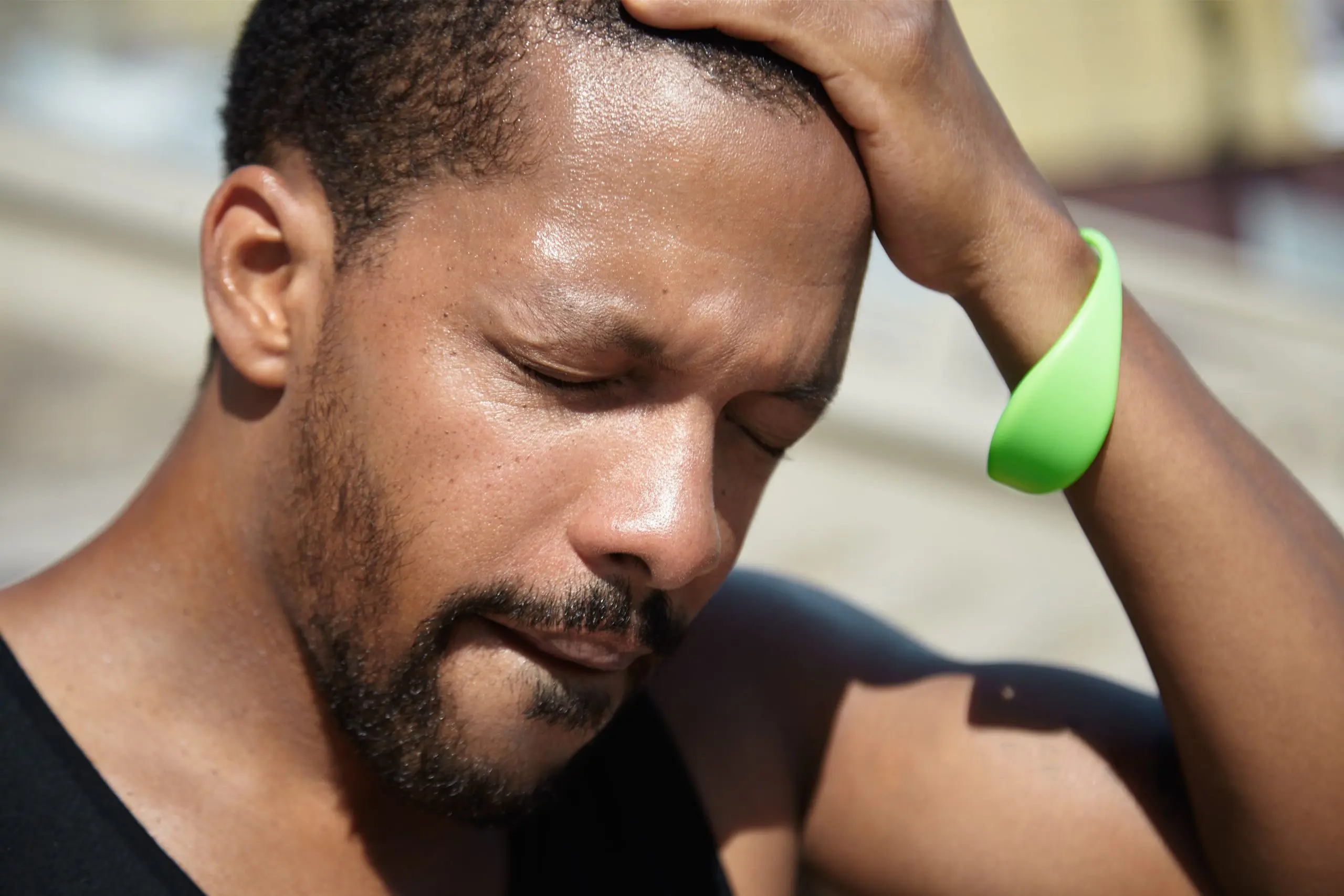
Take, for example, a parent watching their child run around in the midday heat. The child stops frequently to gulp air through an open mouth, red-faced and increasingly tired. They’re not out of shape, nor are they allergic to anything in the air. What’s happening is physiological: the heat is prompting mouth breathing, which is triggering over-breathing, which is leading to CO2 loss and a cascade of symptoms: fatigue, irritability, and shortness of breath and others.
The irony? Mouth breathing, while seemingly helpful in the moment, makes everything worse. It dries out the airways, increases airflow volume, bypasses nasal filtration, and removes the body’s built-in method for cooling, humidifying, and filtering the air: the nose. The result is heavier, faster breathing that depletes the lungs of carbon dioxide, a gas the body needs to function properly.
What feels like a heat reaction is often a breathing reaction made worse by how we adapt to discomfort.
Yes, Carbon Dioxide!
No, you didn’t read that wrong. Yes, the body needs carbon dioxide to function properly.
For decades, this gas has been misunderstood. Many assume it’s a waste gas, something the body needs to eliminate as quickly as possible. But according to the Buteyko Method and decades of research by K.P. Buteyko, MD-PhD, carbon dioxide (CO2) is not just necessary; it’s central to healthy respiration and overall balance in the body.
When CO2 levels in the lungs drop too low, which happens during over-breathing, especially mouth breathing, oxygen delivery to cells becomes impaired. This may sound counterintuitive, but it’s well established in respiratory physiology: oxygen requires a certain concentration of CO2 in order to be efficiently released from the blood into tissues. This is known as the Bohr effect.
So what happens when CO2 falls below normal levels due to heat-triggered over-breathing? Oxygen delivery drops. Blood vessels constrict. Airways become more reactive. Muscles tense. The nervous system ramps up. And the body, despite breathing more, enters a state of internal suffocation: a lack of oxygen at the cellular level.
This internal CO2 deficit can mimic or worsen nearly every symptom heat-sensitive individuals report: shortness of breath, anxiety, fatigue, and poor sleep. These symptoms aren’t always the result of heat itself, but of the body’s altered respiratory chemistry in response to that heat.
For those already sensitive (children with asthma, adults with sleep issues, anyone who unknowingly over-breathes), heat becomes the tipping point, and carbon dioxide becomes the missing piece.
How the Buteyko Method Stabilizes Breathing in Heat
Imagine being able to go for a walk on a 90-degree day without feeling drained halfway down the block. Or waking up in the middle of a humid July night and realizing your mouth is closed, your breathing is quiet, and you feel rested. For many people who apply the Buteyko Method, these kinds of shifts aren’t just possible, they’re common.
When you implement Buteyko Breathing techniques, you don’t push the body to work harder. Instead, you teach it to stop overreacting. One of the main goals is to reduce the breathing volume, that is, to breathe less, but more efficiently. This may sound odd at first, especially since many are taught to “take deep breaths” in response to discomfort. But you quickly understand that the focus isn’t on deep, forceful inhalation; it’s on breathing in a way that preserves carbon dioxide and allows the body to stay regulated.
In hot or humid weather, this is key. The Buteyko Method trains people to maintain nasal, silent, and invisible breathing, even when the environment tempts the body to do otherwise. This doesn’t just reduce symptoms; it rewires the body’s default reaction to stress, heat, and discomfort.
How to Maintain Nasal Breathing When the Heat Feels Unbearable
At this point, you might be wondering: when the air feels heavy and suffocating, how is it even possible to keep the mouth closed? Isn’t mouth breathing unavoidable in the heat?
It’s a valid question, and one that often comes up among those new to the Buteyko Method. After all, when heat and humidity rise, so does the sensation of air hunger. The impulse is to breathe more, and the mouth seems like the body’s easiest access point to relief.
But here’s the surprising truth. Mouth breathing in hot weather isn’t inevitable. It’s a conditioned response, not a biological necessity.
Many people assume that hot conditions “require” heavier breathing. What’s actually happening is that the body is reacting to temperature discomfort with respiratory overdrive, not because it needs to, but because it doesn’t yet know how not to. This is especially true for individuals who have been over-breathing for years, whether due to stress, asthma, allergies, or simply habit.
When a person is used to over-breathing, the sensation of breathing less (even slightly) can feel alarming. The brain interprets it as a shortage of air, even when oxygen levels are perfectly adequate. Heat intensifies that perception, not by reducing oxygen availability, but by increasing the body’s stress response, which then triggers the familiar loop: breathe more, lose CO2, feel worse.
But it’s entirely possible to break that loop.
Nasal breathing in the heat isn’t a superhuman feat. It’s a reflection of a well-regulated respiratory system, one that has learned to stay steady when the environment becomes challenging. Those who practice Buteyko Breathing consistently often find that the mouth no longer flies open during a warm day or restless night. They don’t have to “fight” the heat; their bodies simply don’t overreact to it anymore.
In fact, what once felt unbearable (the humidity, the closeness of the air, the midday sun) begins to feel less intrusive. The breath remains quiet. The chest stays still. The mouth stays closed not because of discipline, but because the body has learned it doesn’t need to panic.
And in moments of physical activity—whether it’s walking up stairs, carrying groceries, or taking a stroll in the midday sun—the answer isn’t to breathe more; it’s to do less. One of the core principles of the Buteyko Method is this: adjust your pace, not your breathing. If nasal breathing becomes difficult during movement, simply slow your pace until it feels easy again. Let the breath set the rhythm.
This mindful awareness of your breath—and the discipline to maintain gentle, healthy nasal breathing even under physical strain—can make all the difference. It helps prevent the mouth from opening in the first place and is often what keeps you steady through the heat, rather than spiraling into breathlessness.
This is the foundation for long-term breathing stability in all seasons, but it becomes especially critical when temperatures rise.
A Final Note: The Climate Is Changing and Yes, Your Breathing Can Too
There’s no question that rising global temperatures and shifting climate patterns are making life harder for many. Hotter summers, heavier humidity, and prolonged exposure to unstable air conditions are contributing to discomfort, disrupted sleep, and increased respiratory stress. These are real challenges, and in many cases, they’re getting worse.
But this changing environment is not a reason to give up on healthy breathing. It’s the exact reason not to.
Mouth breathing may feel instinctive when the air is thick, but it isn’t protective. It magnifies the body’s stress response, lowers carbon dioxide levels, and leaves the nervous system more reactive, not less. While we may not be able to control the weather, we do have some influence over how our body responds to it. And that starts with how we breathe.
If anything, the climate crisis gives us even more reason to optimize our breathing. Learning to breathe through the nose, lightly and silently, gives the body a buffer. It offers protection in environments where the air may not feel safe. It teaches regulation in conditions that otherwise feel chaotic. It allows us to build resilience from the inside out, even when the outside is becoming increasingly unstable.
That doesn’t mean ignoring the larger issue. Climate change is real, and it must be addressed on every possible front, from policy and infrastructure to personal habits. But while we push for broader solutions, we also have to take care of the systems we can influence directly. The breath is one of them.
Because if the current trajectory continues (if air quality declines further, if temperatures climb, if natural rhythms become more unpredictable), then yes, breathing may become even more difficult in the years ahead. And that’s precisely why building breathing awareness, tolerance, and regulation now is not optional. It’s a necessity.
The Buteyko Method reminds us that calm, nasal breathing isn’t just for ideal conditions. It’s a tool for staying centered when conditions are anything but. And in a time where the world feels hotter, louder, and more uncertain, the ability to breathe quietly through your nose while practicing reduced air intake might become one of the most important forms of stability you can develop.
How Can I Take the First Step?
If you’re exploring how to begin learning the Buteyko Method, we offer a range of programs and resources to suit different needs and preferences. These include private sessions, various educational materials, programs for parents and children, and several self-paced video courses.
A great option for independent learning is our Buteyko Method Step-by-Step video course. It offers clear, structured instruction you can follow at your own pace from home.
For those seeking more personalized guidance, our Buteyko Breathing Normalization Training offers one-on-one sessions with Sasha Yakovleva. This program spans 2–6 months and is designed to help you gradually and effectively improve your breathing habits.
To explore all the options and find what feels right for you, please visit this page.