“Your Child Might Have Asthma.” That’s what the doctor told us when Ian was just two years old. He had been coughing non-stop, so we brought him to the hospital. The doctor used the word “might“, and I instinctively chose to believe it might not be asthma. After all, no one in our family had ever had it. It sounds like such a serious illness. We then visited our family doctor, and his diagnosis was far more straightforward:”Your child has asthma.”
My husband and I tried to comfort ourselves by thinking, “But the hospital doctor said it was just a possibility, right? So maybe it’s not.” Deep down, we were simply unwilling to accept that our child might really have asthma. We followed the doctor’s prescription and gave Ian Ventolin. At the time, it didn’t seem like a big deal, as our older son had also used Ventolin before and eventually outgrew the symptoms. We just assumed Ian was prone to getting sick, nothing more.
Then came 2022, when Ian started primary school. That’s when we began to notice some real problems.
Each morning, he seemed exhausted, as if he hadn’t slept enough. He was sluggish and didn’t want to get out of bed. Every school term, he would get sick and miss class for at least a week or two. Whenever there was a virus going around, Ian definitely caught it.
Not only did I have to care for a sick child, I also had to coordinate with all his extracurricular class instructors for absences and makeup sessions. On top of that, I had my own job. The physical and emotional toll was overwhelming. We just assumed Ian had a weak immune system and that he was more susceptible to illness than other kids. By then, we had completely forgotten the doctor once said he had asthma.
Then one day, after Ian had been coughing for nearly a month with no improvement, we became seriously concerned about his lungs and took him back to our family doctor. After checking, the doctor reassured us his lungs were clear, but firmly repeated the diagnosis: “Ian has asthma.”
This time, we chose to believe it. But hearing that asthma is a lifelong condition was crushing. I almost broke down in tears.
We learned that treating asthma often involves increasing medication doses over time and eventually leads to the use of steroids. We were extremely anxious. As the old Chinese saying goes, “Every medicine has its poison.” So we started looking for alternative approaches, such as Traditional Chinese Medicine, acupuncture, massage, or even Korean medicine. In our search for alternatives, my husband came across the Buteyko Breathing Method online.
At first, I was skeptical. I used to think that only Eastern medicine had effective natural therapies. But as my husband began seriously studying the method through books and videos, and started reminding Ian to keep his mouth closed and reduce his breathing, we began to notice a slight improvement.
That’s when I thought why not give it a try? As long as it doesn’t involve medication, it’s worth exploring.
So I began studying the Buteyko Method. After just two weeks of non systematic practice over a school holiday, we saw significant improvement. However, I still didn’t know how to coach Ian properly or what precautions to take. While he still occasionally had flare-ups, the frequency clearly dropped.
At that point, I made a decision: I was going to study the Buteyko Method formally and help Ian overcome his asthma completely.
I enrolled in the Buteyko Specialist Course. My perspective is not only to help my own child but to one day become a certified Buteyko specialist who could support other families too.
As I learned, I began applying the techniques with Ian at home, and the results were very obvious. I soon realized that the Buteyko Method is far more than just breathing techniques. It’s a complete lifestyle system. It touches every aspect of daily life: how we eat, how we move, how we speak, and more.
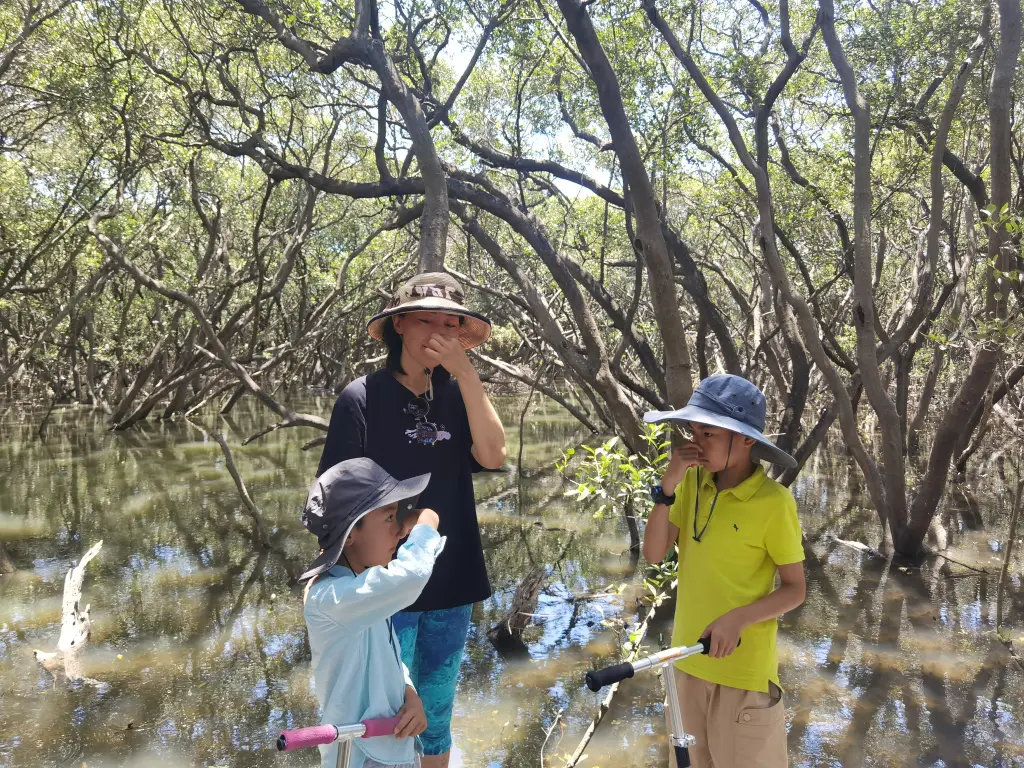
Getting a child to do breathing exercises every day isn’t easy. But I made it fun and engaging. Whenever we were out, on a car ride or a hike, every few minutes, I would have him do breathing exercises, like breath holds or Humming.
Adjusting our diet was probably the biggest challenge for me as a mom.
Sugar, for example, worsens breathing issues, but Ian has a sweet tooth. Ice cream, cold and sugary, is his favorite. At home, I did my best to stop buying sweets, but out at parties or gatherings, sugar is everywhere. When I couldn’t avoid it, I strictly limited his intake. If your child doesn’t like sweets, lucky you!
Next, we had to cut out dairy products, which was even harder. I’m a dairy lover myself, and Ian inherited that from me. Anything with milk or cheese, we both enjoy. I didn’t eliminate dairy all at once. Instead, I started replacing dairy products slowly. I began buying plant-based cheese and switched to plant milk for cooking. For breakfast, I gradually replaced milk with oat/soy milk in his oatmeal. Ian didn’t seem to mind.
Kids follow their parents’ behavior. Ian watched me switch from regular milk to half plant milk in my coffee, and sometimes even use only plant milk. The taste wasn’t as rich, but I believed it was worth it. Over time, dairy became less and less common in our household, and Ian adapted.
Originally, learning Buteyko was just about managing Ian’s asthma. But the more I studied, the more I discovered that over breathing causes a wide range of symptoms, many of which are the body’s defense mechanisms: sleep apnea, snoring, high blood pressure, allergies, and more.
That’s when I thought of my older son. He used to snore loudly with his mouth open at night. During a school camping trip, one of his classmates even complained that his snoring was so loud, it kept him up all night.
So I started training my older son the Buteyko Method too. After some consistent practice, his snoring decreased significantly. It was like a miracle.
Now, after about 8–9 months of consistent Buteyko training with Ian, his asthma is fully under control. We haven’t seen a doctor or taken any asthma medication in all that time. Sometimes, I even forget that he has asthma.
I no longer need to request frequent absences from school or reschedule expensive extracurricular lessons due to illness.
My husband and I have finally been able to breathe a sigh of relief.
From one parent to another, I truly hope that every family with a child suffering from over breathing or asthma can discover the Buteyko Method. It has the power to improve not just breathing, but overall health and wellbeing, for your child and for your entire family.
Yan L.,
Australia