By Sasha Yakovleva, Advanced Buteyko Specialist, Co-Founder of the Buteyko Breathing Center
There is a particular kind of exhaustion that comes with managing a chronic condition. Not just the physical tiredness, but the accumulated weight of learning to live within limits, of planning around symptoms, of answering the question “can I do this?” before almost every decision. People who have managed asthma for years know this exhaustion intimately. They know the particular quality of air that will trigger them, the exact threshold of exertion that tips the balance, the sound of their own breathing at three in the morning.
At some point, most of them stop asking whether things could be fundamentally different. Not because they have given up hope exactly, but because nobody has ever offered them a convincing enough answer to make the question worth asking again.
The answer the Buteyko method offers is this: the inhaler is managing a symptom. The breathing pattern is the cause. And breathing patterns, with the right guidance and consistent practice, can genuinely change.
This is not a promise of quick results or easy transformation. The Buteyko Breathing Center works with people who are ready to engage seriously with a structured process of change, one that asks something real of them and delivers something real in return. What it offers, which most conventional asthma treatment is not designed to provide, is the possibility of addressing the mechanism beneath the symptom rather than continuously managing the symptom itself.
This guide explains that mechanism, the research behind it, and what the actual path of change looks like for the people who undertake it.
What Conventional Asthma Treatment Is Designed to Do
Bronchodilators open airways when they narrow. Corticosteroids reduce inflammation over time. Both are genuinely useful tools for a condition that can be frightening and, in its most acute forms, dangerous. Nothing in the Buteyko approach asks anyone to manage asthma without medical oversight. The opposite is true: working with a physician throughout the training is foundational.
But these treatments operate at the level of the symptom. A bronchodilator responds to airway narrowing. It does not ask why the airway narrowed. A corticosteroid reduces inflammation without examining what created the conditions for that inflammation. For many people, this is enough. Asthma is managed, life continues, and the question of underlying cause never becomes urgent.
For others, particularly those watching their medication use hold steady or increase year after year, the question of cause does become urgent. And that is precisely where the Buteyko method begins its work.
The Mechanism Behind Asthma That Most People Are Never Told About
In 1952, a Soviet physician named Konstantin Buteyko made an observation that would take decades to receive attention in Western medicine. His patients with asthma shared a distinctive breathing pattern: they consistently moved more air than their metabolism required. Not dramatically more. Subtly, chronically more. And this pattern, he proposed, was not merely a consequence of their asthma. It was feeding it.
The mechanism runs through carbon dioxide.
Most of us carry the assumption that carbon dioxide is simply a waste product, the gas the body produces and discards with each breath. What this misses is that CO2 is also an active regulator of some of the most fundamental physiological processes in the body, including the delivery of oxygen to the tissues. This relationship is described by the Bohr effect, named after the Danish physiologist Christian Bohr who documented it in 1904.
The Bohr effect establishes something that overturns the intuitive picture of breathing: when CO2 levels in the blood are adequate, hemoglobin releases oxygen readily to the tissues that need it. When CO2 drops, hemoglobin holds oxygen more tightly. The oxygen is present in the bloodstream. It simply is not being delivered where the body needs it.
This means that breathing more does not automatically mean more oxygen reaching the tissues. In conditions of chronic hyperventilation, where more air is being moved than the metabolism requires, CO2 is exhaled faster than it is produced. Blood CO2 falls below the level the body considers optimal. Oxygen delivery becomes less efficient. The brain, the muscles, the tissue of the airways themselves, all receive less oxygen than they should, even as the lungs appear to be working hard.
The body’s response to this drop in CO2 is intelligent and protective. Smooth muscle in the airways contracts. The airways narrow. Blood vessels constrict. The breathing reflex becomes more sensitive and triggers more easily. These are homeostatic adjustments, the body working to preserve the CO2 it still has.
Seen from this angle, airway constriction in asthma is not a malfunction. It is the body doing exactly what it was designed to do: protecting its remaining carbon dioxide from further loss. The system is functioning correctly. What is wrong is the trigger, a breathing pattern that chronically moves more air than the body requires.
Address the trigger, and the protective responses have less reason to occur.
What Happens During an Asthma Attack: The Loop That Can Be Interrupted
An asthma attack typically follows a recognizable sequence. A trigger arrives, whether cold air, exertion, emotional stress, an allergen, or simply a run of faster breathing in an anxious moment. Breathing accelerates. CO2 falls further. The homeostatic response intensifies. Airways narrow sharply. The sensation of breathlessness becomes acute, which drives the urge to breathe harder, which accelerates CO2 loss further.
This is a feedback loop. And recognizing it as a feedback loop changes what becomes possible.
The conventional response is to reach for a bronchodilator, which addresses the narrowing directly. For someone trained in the Buteyko method, the response is different: reduce the volume of the breath, ease the urgency, allow CO2 to stabilize. In a trained student, this can interrupt the loop before it completes. In someone who is early in the training, the work is oriented toward raising the threshold at which the loop begins at all.
Sleep, Night-time Breathing, and Why Morning Is Often the Hardest Time
For many people with asthma, the worst moments arrive in the night or early morning. This is not a coincidence, and it is not simply a matter of cold air or lying down.
During sleep, conscious control of breathing disappears entirely. The patterns that govern the breath at night are automatic, the ones the body has rehearsed for years without any awareness. For someone who breathes habitually through their mouth during the day, that pattern typically continues and often intensifies during sleep. Mouth breathing moves a larger volume of air than nasal breathing does. CO2 is lost more rapidly. The homeostatic responses that this drives operate throughout the night without any counterweight.
Restoring nasal breathing during sleep is one of the most important early changes in the Buteyko approach to asthma. For some students, it is where the most striking early improvements appear. The nose is a respiratory organ built for the job: it filters, warms, and humidifies the incoming air, produces nitric oxide with its dilating and regulatory effects, and naturally slows the breath through its resistance. None of this happens when the mouth takes over.
In the Buteyko Breathing Center’s programs, nighttime breathing is addressed directly and specifically, with guidance on how to create conditions for nasal breathing to be maintained through the night and how to track the effects on the overall symptom pattern.
What the Research Shows
The Buteyko method has been examined in a number of randomized controlled trials since the late 1990s. The results are consistent in their direction and honest in their limits.
Before these Western studies were published, however, the method had already been used and investigated in the Soviet Union for many years. Early clinical evaluations were conducted at the Research Institute of Pulmonology in Leningrad in 1968, followed by work with children with asthma in Moscow in the early 1980s. By 1985, the accumulated clinical evidence within the Soviet medical system was sufficient for the USSR Ministry of Health to issue Order No. 591, dated April 30 of that year, formally recommending the Buteyko Method for the treatment of bronchial asthma. The method was not waiting to be discovered in the 1990s. It had already been introduced into medical practice on the other side of the world, in the system where Dr. Buteyko himself worked.
The Western trials followed. The 1998 study by Bowler and colleagues, published in the Medical Journal of Australia, found that participants who received Buteyko training showed a 90 percent reduction in bronchodilator use and a 49 percent reduction in inhaled corticosteroid use at three months, compared to a control group. Quality of life scores improved significantly.
The 2008 study by Cowie and colleagues, published in Respiratory Medicine, found reductions in asthma symptom scores, improvements in asthma control, and reduced bronchodilator use. The improvements were maintained at six months. The New Zealand trial by McHugh and colleagues, published in the New Zealand Medical Journal in 2003, found the same pattern: reduced bronchodilator use, improved quality of life, and no adverse effects on lung function.
What these trials consistently demonstrate is not that Buteyko eliminates asthma as a diagnosis. They demonstrate that learning to breathe differently reduces the frequency and intensity of symptoms and the need for rescue and maintenance medication in a significant proportion of participants. The mechanism is consistent with what Buteyko proposed: normalizing the breathing pattern reduces the homeostatic triggers for airway constriction. The research confirms the direction of the effect.
The Control Pause: Measuring What Changes
One of the first things a new student at the Buteyko Breathing Center learns is the control pause (also known as Positive Maximum Pause). It is a simple measurement, and it tells a clear story.
After a normal, relaxed exhale through the nose, hold the breath comfortably without straining until the first distinct physical urge to breathe arrives. The number of seconds that pass is the control pause.
A control pause of 40 seconds or more reflects good CO2 tolerance and good health in the Buteyko framework. Most people who arrive at the Breathing Center with asthma measure somewhere between 5 and 20 seconds. Some are lower.
This is not a test of willpower. It is a measure of how quickly the breathing reflex fires at the current CO2 level, which reflects how reactive the entire system is. A low control pause means the threshold for triggering homeostatic responses, including airway constriction, is also low.
The practical work of the Buteyko method is the gradual, structured increase of this number. Not through breath-holding exercises or forced techniques, but through learning to breathe at a volume the metabolism actually requires, through consistent nasal breathing, and through the specific exercises of the training. When a student moves their control pause from 10 seconds to 30 seconds over months of practice, the number is not the achievement. The changed breathing pattern behind it is.
Why Nasal Breathing Is Not the Only Preference
The emphasis the Buteyko method places on nasal breathing is sometimes misread as a lifestyle recommendation, something like drinking more water or getting more sleep. Nasal breathing is essential, but the issue is bigger than that.
The nose was built for breathing. The mouth was not. Nasal breathing filters, warms, and humidifies the incoming air before it reaches the lungs. It produces nitric oxide in the nasal passages, a molecule with significant dilating effects on airway smooth muscle and important roles in vascular regulation. It naturally slows the breath through the resistance of the nasal passages. And it makes chronic hyperventilation considerably harder to sustain.
Mouth breathing bypasses every one of these functions. It introduces cooler, drier, unfiltered air to the airways. It removes the nitric oxide contribution. It allows a larger volume of air to move through the respiratory system more quickly, accelerating CO2 loss. For someone already managing asthma from a baseline of low CO2 tolerance, this is the opposite of what the body needs.
Many people with asthma are habitual mouth breathers, particularly during sleep. In some cases this pattern has been present since childhood and feels entirely natural, because it has been normal for so long. Restoring nasal breathing, first during rest and eventually through sleep and light exertion, is one of the earliest and most foundational steps of the training.
The Russian Lineage and the Depth of the Method
The Buteyko Method originates in a specific medical and clinical tradition. Dr. Konstantin Buteyko developed his approach in the Soviet Union during the second half of the twentieth century, first through clinical research and later through direct work with patients, doctors, and practitioners. He trained a group of specialists personally, and this direct transmission matters.
I trained in Russia, within the tradition connected directly to Dr. Buteyko’s own work. I mention this not simply as a credential, but because it affects the substance of what I teach. In the West, the Buteyko Method is often presented in a simplified form: nasal breathing, mouth taping, reduced breathing exercises, or help with asthma symptoms. These are important parts of the method, but they are not the whole of it.
In the Russian tradition, Buteyko is understood as a complete system of breathing normalization. It includes not only techniques, but also a precise way of observing the breathing pattern, understanding the role of chronic hidden hyperventilation, adjusting the practice to the individual person, and guiding students safely through the process of physiological change. This is why lineage matters. The depth of what is transmitted depends on the depth of what was received.
Dr. Buteyko’s work also went beyond asthma and symptom relief. He became increasingly interested in how chronic hidden hyperventilation can contribute to a deeper breakdown of self-regulation in the body, affecting the nervous system, circulation, metabolism, sleep, emotional stability, and the body’s ability to repair itself. In the Russian Buteyko tradition, this broader understanding was an essential part of the work, not an add-on.
This does not mean that breathing explains every illness or replaces medical care. It means that breathing is one of the body’s central regulatory functions. When breathing becomes chronically excessive, even subtly, it can become a constant physiological stressor. When breathing is gradually normalized, the body often becomes better able to regulate itself.
Breathing sits at a unique intersection between conscious awareness and automatic physiology. It is normally regulated by the autonomic nervous system, yet we can also observe it, influence it, and retrain it. This makes breathing a doorway into processes that are usually outside of direct conscious control.
Students who work here are not learning a simplified or commercialized version of the method. They are learning the Buteyko Method as a structured process of breathing normalization, grounded in the Russian tradition and transmitted through teachers who received it directly from Dr. Buteyko’s work.
What the Breathing Normalization Training Looks Like
The Breathing Normalization Training at the Buteyko Breathing Center is an individual program. You work directly with me over a structured period of months, in weekly or biweekly sessions. There are no group classes in this format, no situations where your specific situation takes a back seat to a general curriculum. The program is built around your breathing pattern, your history with asthma, your medications, and what you are working toward.
We begin with an assessment. I want to evaluate your breathing patterns and understand the full picture of your asthma: when it began, how it has progressed, what triggers it, what medications you are currently using, and what your breathing looks like at rest, during exertion, and at night. From that assessment, a personalized program is developed with targeted exercises, clear goals to improve your CO₂ levels over the course of the program, and focused attention on the breathing patterns most relevant to your situation.
Throughout the program, your relationship with your doctor and your medications does not change without their involvement. If your medication use decreases, which is what many students experience as their Control Pause improves and symptoms become less frequent, that reduction happens in consultation with your physician. The Buteyko method is not a replacement for medical oversight. It works alongside it, addressing what conventional asthma treatment was not designed to address.
What Students Experience, and When
The honest answer to how quickly things change is: it varies. A breathing pattern that has been present for twenty years does not reorganize itself in a week. What changes gradually is the body’s baseline, the CO2 level it considers normal, the sensitivity of the breathing reflex, and the frequency with which the homeostatic responses that drive symptoms are triggered.
Some students notice early changes within the first one to three weeks: a reduction in the morning tightness that has been a daily companion, less frequent use of the inhaler, longer intervals between asthmatic symptoms, and a night or two of sleep that is no longer interrupted. Some people are even able to stop using their rescue inhaler after the first few sessions because they learn how to regulate asthma symptoms naturally by adjusting their breathing. These early signals are encouraging, and they are also partial. The work of the program is building a new baseline, not celebrating isolated improvements.
By the midpoint of a structured program, students who practice consistently and work through the exercises as directed typically see meaningful improvement in their Control Pause, along with a noticeable reduction in the frequency and intensity of symptoms.
This progress is not accidental. Breathing retraining requires correct practice, regular guidance, and the student’s active participation. It is not a pharmaceutical intervention with a fixed dose-response curve, but a physiological training process. When students commit to it fully, the method has a strong track record of producing significant and often life-changing results.
The student stories I most often share are usually from people who came to the Buteyko Breathing Center with skepticism. These stories are powerful because the changes are very concrete. The students can describe what their symptoms were before they began, how their Control Pause changed during the program, and what improved.
They are not speaking in vague terms. They can often say, “This is when I stopped waking up at night,” or “This is when I stopped needing my rescue inhaler,” or “This symptom has not returned.” Their experience shows the difference between simply believing in the method and actually seeing measurable changes through practice.
Student testimonials at the Buteyko Breathing Center document many of these experiences, including the stories of students examined by James Nestor while he was researching his book Breath, and the story of David Wiebe, whose recovery was also featured in The New York Times.
Who This Work Is For
The Buteyko method for asthma is suited to people who are willing to engage seriously with a process of change. It is not a passive treatment. It requires practice, attention, and genuine willingness to understand what has been happening in the body and to work with it differently.
It is suited to adults who have been managing asthma with medication and want to explore whether something more fundamental can shift — not by replacing medical care, but by addressing the breathing patterns that medication does not change.
It is suited to parents of children with asthma and other health problems. I work with asthmatic children through the Healthy Child Naturally program by training their parents to help them breathe better. My book, Breathe to Heal: Break Free from Asthma, includes a section specifically for parents regarding children with asthma, with illustrated breathing exercises designed for use at home.
It is suited to people who have encountered the CO2 and nasal breathing science through sources like James Nestor’s book Breath and who recognize that the book is pointing toward a body of practice that has existed, in structured form, for decades. James came to Boulder, Colorado to learn the method from me and to interview students at this center while researching the book. What he described in the chapter he titled Less is grounded in the same understanding that this program is built on.
It is not suited to people who are looking for an instant result without effort on their part. Breathing retraining is more like rebuilding muscle than taking a pill. The method can be very effective, but it requires correct practice, repetition, and willingness to work with the body over time.
Just as muscles become stronger through regular training, breathing becomes healthier through consistent, guided practice. What the Buteyko Method offers is a clear physiological basis, a peer-reviewed evidence base that points consistently in the same direction, and a depth of practice transmitted carefully through the Russian tradition for more than half a century. For students who are ready to commit to this process, the results speak for themselves.
The Natural Starting Point
If something in this description resonates, if there is a degree of recognition in reading about the mechanism or the process, the right place to begin is with a Private Session.
In that conversation, I want to understand your specific situation: the history of your asthma, your current medications, your daily patterns, and what you are genuinely hoping for. Not every person who contacts the Buteyko Breathing Center is at the right point to begin the Breathing Normalization Training immediately, and I would rather have an honest conversation about that than enroll someone for whom the timing or circumstances are not yet right.
If the training is the right fit for where you are, we begin the course and build from there. The Control Pause you measure at the start of this work will not be the one you measure at the end. For students who do this seriously, that is not an optimistic projection. It is a description of how the body responds when the breathing pattern it has relied on for years finally changes.
Breathing can change. The body is not fixed in the patterns it has developed. What has been built over time, including the patterns that have governed your asthma, can be rebuilt differently.
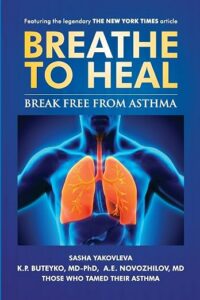 |
Breathe to Heal: Break Free from AsthmaSasha Yakovleva’s comprehensive guide to using the Buteyko Method for asthma, with a dedicated section for parents of children with asthma. |
| Work Directly with Sasha
Book a Private Session to evaluate your breathing and explore whether the Breathing Normalization Training is the right fit for your situation. https://buteykobreathingcenter.com/products/private-session-with-sasha |
About the Author
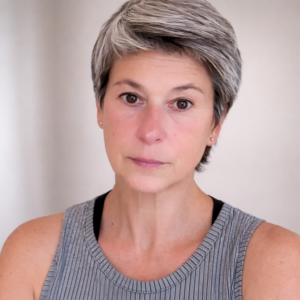 Sasha Yakovleva is an Advanced Buteyko Specialist and co-founder of the Buteyko Breathing Center. She trained in the Russian Buteyko tradition and has taught the method to students across the United States and internationally. Her book Breathe to Heal: Break Free from Asthma is available on Amazon. James Nestor researched and interviewed Sasha and her students at the Buteyko Breathing Center while writing his book Breath. Sasha’s work was featured in The New York Times.
Medical Disclaimer
The services provided by the Buteyko Breathing Center are educational in nature. Sasha Yakovleva is a Buteyko Breathing Normalization Specialist and educator, not a medical doctor. Nothing in this article constitutes medical advice. All decisions about medication, including any reductions in use, should be made in full consultation with your physician. Results vary from person to person.